
Applications are now open for the Black Sea Architecture and Heritage Preservation Workshop, an international program dedicated to the exploration, documentation, and preservation of architectural heritage specific to the Black Sea coast.
Open call Black sea heritage preservation workshop in Eforie Sud.pdf
Field of study
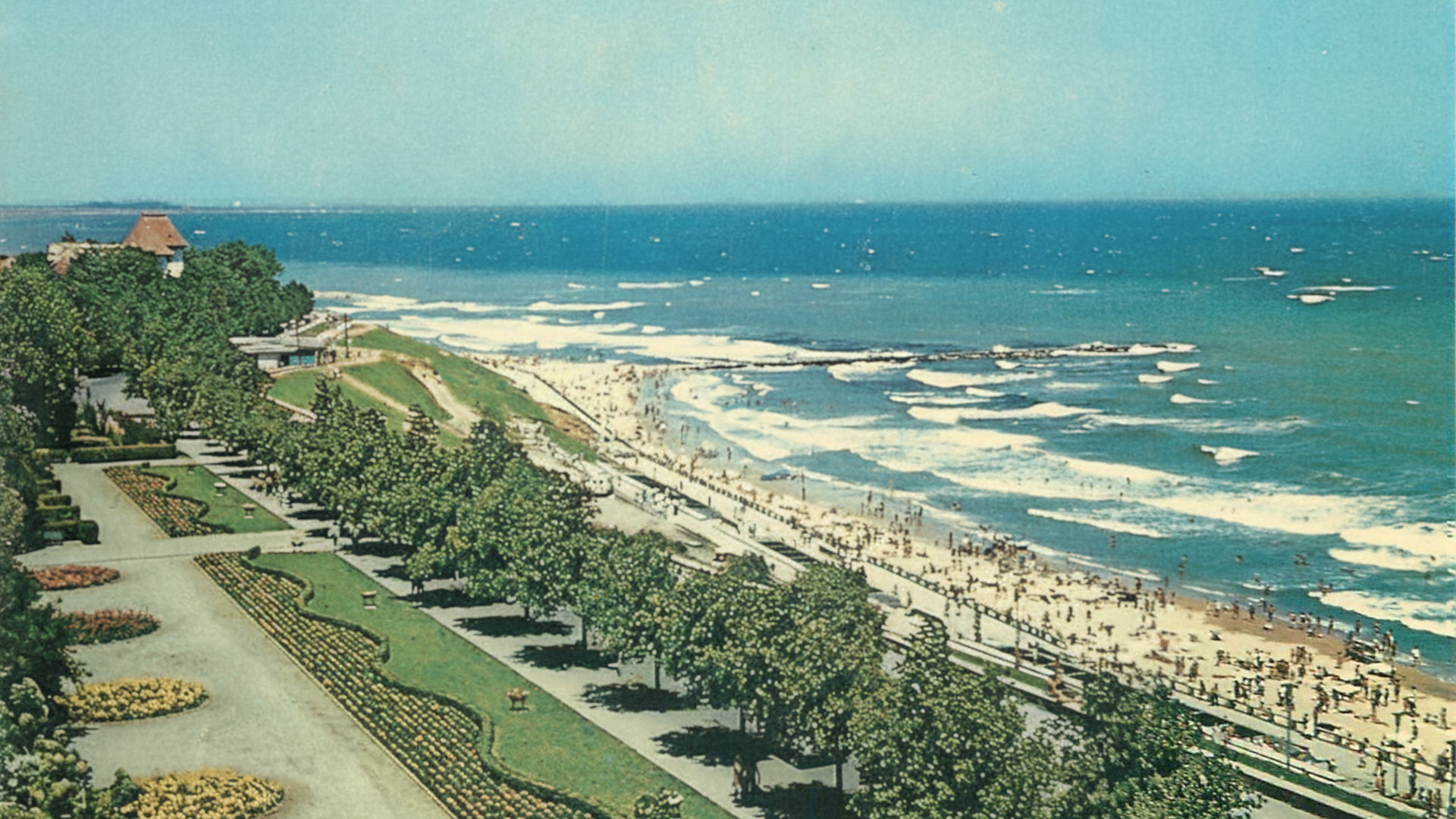
The preservation of seaside resort heritage represents a major cultural and architectural challenge in Romania and across Southeastern Europe, as coastal tourism has profoundly shaped the region’s landscapes, economies, and patterns of urban development. Following the rise of therapeutic sea bathing at the end of the nineteenth century, a chain of resorts gradually developed along the Black Sea coast, from Yalta and Odesa to Constanța, Eforie, Albena, and Varna.
During the interwar period, these resorts became important sites of architectural experimentation and cultural life. Modernist villas multiplied along the coast, while casinos and seaside promenades redefined the urban landscape. Prominent architects, such as Henrieta Delavrancea-Gibory, contributed to shaping the interwar architectural identity of the Romanian littoral.
From the late 1950s onward, the Black Sea coast became a laboratory for large-scale seaside development led by the arch. Cezar Lăzărescu. The expansion of mass tourism, supported by industrialized reinforced concrete construction, led to the creation of extensive resort complexes and collective leisure facilities—open-air theaters, cinemas, baths, and children’s camps—typical of socialist tourism infrastructure.
Today, this heritage faces significant challenges: neglect, decay, energy and insulation issues, redevelopment pressure, climate challenges affecting coastal areas, and increasing tourist development. Many buildings are demolished or remain underused or vacant, despite their historical and symbolic importance.
Teaching team & institutions
To address this issue, an international team of architects will gather in Eforie Sud from May 4 to 10, 2026:
- The Chaillot School, part of the Cité de l’Architecture et du Patrimoine in Paris, which has trained architects in heritage conservation for over 140 years;
- The Ion Mincu University of Architecture and Urban Planning, Bucharest;
- The National Institute for Immovable Cultural Heritage, Sofia, where a Franco-Bulgarian double degree in heritage restoration has been offered for 25 years;
- The Kharkiv School of Architecture, Ukraine;
- Heritage preservation experts from the Republic of Moldova
Learning objectives
Eight high-value heritage sites have been selected in Eforie Sud. The international teaching team will mentor students, recent graduates, and young practitioners, who will work in groups on these sites.
The educational objectives are to:
- Develop an integrated understanding of heritage values – —landscape, urban, and architectural— and the relationships between them.
- Explore heritage conservation methods, particularly the diagnostic approach developed by the Chaillot School;
- Train the eye and understand the key stages of a rehabilitation project: observation, analysis, prioritization, and design.
- Learn to work across multiple scales, from buildings to urban design and decorative elements;
- Develop practical skills in field survey, architectural documentation, and on-site analysis;
- Reflect on strategies for reactivating this distinctive coastal architectural landscape.
- Foster interdisciplinary collaboration and collective reflection in addressing complex heritage preservation challenges
Practical information
Where: Eforie Sud, Romania.
When: Arrival on Monday 4th during the evening; departure on Sunday 10th; 5 full-time days of work from Tuesday 5th to Saturday 9th.
Who: Newly graduated in heritage and architecture, young practitioners willing to specialize in heritage preservation, PhD students, Masters’ Degree students.
Fees: The workshop is fully subsidized by the French and Romanian ministries of culture.
The educational cost, accommodation, and catering costs will be covered. Participants will be responsible for their transport costs.
Recognition: A certificate of participation will be issued.
Selection: 10 places are open for Romania.
Work language: English. Speaking French is not mandatory to attend. An English translation will be provided, and part of the teaching staff is plurilingual.
Application process
Applications are open from 17.03.2026 until 27.03.2026 and must be addressed to both Irina Băncescu, Assist. Prof. Dr. Arch., UAUIM Bucharest, bancescuirina@gmail.com & Julia Charier, Cheffe de projets développement international et territorial, École de Chaillot, julia.charier@citedelarchitecture.fr.
Candidates are required to submit the following documents in PDF format: a short curriculum vitae (CV), a brief statement of intent (between 300 and 500 words), and a selected portfolio of relevant work.
Applications will be reviewed by a committee organized by the Ion Mincu University of Architecture and Urban Planning and the Chaillot School, no later than March 31, 2026. Shortlisted candidates will subsequently be invited to an interview. Final participants will be notified no later than April 3, 2026.